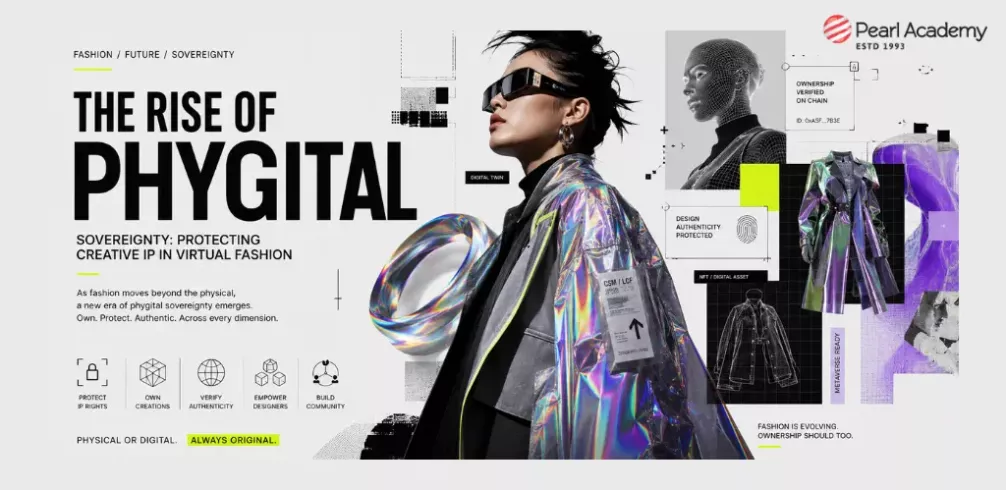
Fashion is no longer confined to the runway or retail floor; it is evolving into a hybrid ecosystem where physical and digital experiences intersect. As brands expand into virtual spaces, questions of ownership, authenticity, and creative control are becoming more complex. From NFTs and digital twins to emerging ideas like phygital sovereignty, the industry is rethinking how design is created, protected, and experienced, highlighting the urgent need for stronger intellectual property frameworks in a digitized fashion landscape.
Become future-ready with our Fashion Programs
Know More
The term ‘phygital’ is derived from the words ‘physical’ and ‘digital.’ The concept of phygital fashion refers to the experience of a fashion product existing simultaneously in both physical and digital spaces. In today’s digital economy, brands are moving beyond traditional retail environments. As fashion becomes increasingly accessible on digital platforms, brands are actively exploring new channels to deliver high-fashion experiences through generative AI, augmented reality (AR), virtual reality (VR), and metaverse technologies. The emergence of phygital fashion also enables brands to store their designs digitally on cloud-based platforms, helping ensure a stronger authenticity and ownership of designs.
The concept of phygital sovereignty is a proposed framework that advocates for the ownership of original creations by brands and artists across both physical and digital spaces. As fashion and retail become increasingly accessible across these environments, practices such as duplication pose a significant threat to the intellectual property rights of brands and artists, particularly individual designs and creative works. As a subjective discipline, fashion has long been susceptible to plagiarism; however, the lack of robust digital frameworks to secure ownership of digital designs has further intensified concerns around authenticity.
To address these challenges, phygital sovereignty aims to enable designers to own and control their creations across physical garments, digital twins, NFTs, and virtual worlds, without compromising their rights due to platform fragmentation or unauthorized replication.
Fashion brands are increasingly expanding their design presence and visibility across digital platforms such as NFTs, the metaverse, and video games. As this digital footprint grows, concerns related to intellectual property (IP) infringement have also risen significantly. While digital spaces enable brands to push innovative and creative boundaries and experiment with new design formats, the protection of intellectual property, particularly for conceptual and digital assets, often remains a grey area.
NFTs backed by blockchain technology, form a significant part of digital fashion ecosystems, NFTs widely adopted by artists and designers as tools for ownership and monetization. However, they are also vulnerable to copyright infringement and unauthorized replication. A notable example is the case involving Hermès International, which successfully claimed intellectual property rights and received damages after a court ruled against a digital artist. The artist had created and sold a series of NFTs titled MetaBirkins, which were inspired by the brand’s iconic products and generated substantial revenue.
While arguments around artistic inspiration and freedom of expression remain relevant, the large-scale commercialization of such digital creations, without authorization or proper attribution, raises serious concerns regarding ownership, authenticity, and ethical design practices in digital fashion.
The following are some of the common challenges in IP accountability in digital fashion:
- Platform fragmentation across NFTs, gaming, and metaverse ecosystems weakens consistent IP enforcement.
- Digital fashion assets can be infinitely replicated, making exclusivity difficult to sustain.
- The line between inspiration and infringement remains highly ambiguous in virtual design.
- Blockchain verifies ownership records but does not inherently prevent copyright violations.
- The absence of standardized global frameworks leaves digital fashion IP legally vulnerable.
Fashion houses today are deploying modern technologies to ensure they maintain ownership and authenticity of their creations across digital platforms. Majorly utilizing traceable and verifiable channels such as Blockchain, NFTs, and MI models allow brands to ensure their IP and copyrights are secured and safe. The following are some of the techs that is being used to oversee ownership on the digital space:
1. Verifiable Ownership via Blockchain: Blockchain technology allows designers to have immutable, traceable, and verifiable transaction history. This enables brands to establish and verify the digital transaction of their products and assets. However, it is important to note that the while blockchain keeps track of the transactions, the legal copyright ownership still remains as per the legal framework.
2. Traceable NFTs: NFTs allow designers to track the origin, ownership history, and transaction history of a design on blockchain. This allows designers and buyers to verify the authenticity of the NFT and identify counterfeiting practices.
3. Smart Contracts: These contracts that are self-executing code embedded in blockchain, allow creators to get royalties automatically from secondary sales of digital fashion assets. This allows designers to gain long-term economic participation in the lifecycle of their creations.
4. Digital Twins: A digital twin is a virtual replica of a physical product (fashion article). Digital twins allow a link between physical product and different clones of the same product in the digital space. These twins can support traceability when integrated with tracking systems such as blockchain or IoT.
5. Detection of Counterfeits via AI: Designers also use different AI models to detect counterfeit designs and products. Advanced AI models can analyze metadata, patterns, and visual structures to identify fraudulent copies in real time, adding an extra layer of security and supporting detection of potential infringement.

Student Guidance Center: Our Counselors are Just a Click Away.
Even though it is currently mostly conceptual, phygital fashion is expected to gain popularity among small companies and up-and-coming designers in addition to major fashion houses. Young designers can push creative boundaries, create new concepts, adjust to changing technologies, and participate in more sustainable fashion practices by using a dual-platform approach that protects their intellectual property.
Digital fashion at scale enables designers to reach new audiences across global digital platforms, even though conventional retail is still thriving due to steady customer demand. Because of this, it is anticipated that phygital fashion, which necessitates at least a conceptual understanding of technologies like blockchain, NFTs, and the metaverse, will become an increasingly valuable skill for design students.
With brands like Nike, Myntra, and Dior already experimenting with phygital practices, this shift reflects the evolving dynamics of the fashion industry and highlights the growing importance of technological adaptation for future success.
References:
1. The Rise of Phygital Commerce: How Brands Are Blending Physical and Digital Experiences to Revolutionize Customer Engagement. International Journal of Novel Research and Development, 2024, https://www.ijnrd.org/papers/IJNRD2411190.pdf
2. Law Gratis. Virtual Fashion Items and IP Conflicts. 2026, https://www.lawgratis.com/blog-detail/virtual-fashion-items-ip-conflicts
3. MakeUseOf. What Are Phygital NFTs? n.d., https://www.makeuseof.com/what-are-phygital-nfts/ 4. Phygital Fashion Sovereignty: The 2026 Rise of Physical Clothing Linked to Permanent Digital Twin NFTs for Authenticity, https://worldwatchbulletin.com/lifestyle/phygital-fashion-sovereignty-the-2026-rise-of-physical/cid18126020.htm