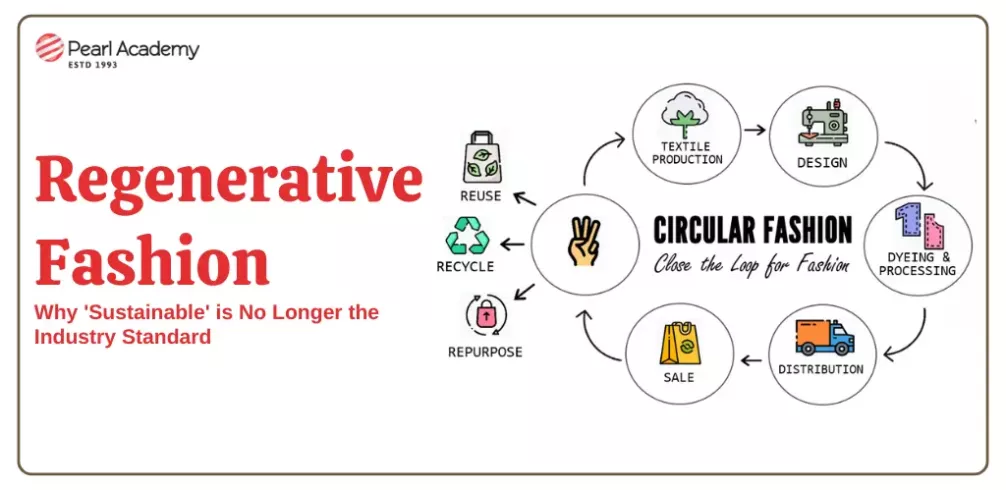
If 2020 was the year of the "sustainability" pledge, 2026 is the year of its obsolescence. For decades, the fast fashion industry has operated on a logic of sustainability using recycled synthetics and incremental carbon offsets. However, as global supply chains face the material realities of soil depletion and biodiversity loss, the concept of sustainability has been exposed as a static goal that merely maintains a degraded status quo.
The discourse has shifted toward regenerative fashion, a paradigm that demands the industry act as a biological participant rather than a purely extractive force. This transition represents a fundamental symbolic and systemic pivot from "sustaining" to "restoring."
Become future-ready with our Fashion Programs
Know More
The primary tension in contemporary fashion communication lies in the failure of the "carbon neutral" label to address ecological complexity. While traditional sustainability focused heavily on manufacturing's carbon footprint, regenerative models prioritize the health of the entire ecosystem. This movement is rooted in indigenous land management practices and holistic agriculture. It suggests that a garment should not just have a net-zero impact but should actively contribute to the sequestration of carbon and the revival of local water cycles.
Research suggests that as consumers become more sophisticated in their environmental literacy, the vague promise of "eco-friendly" materials loses its market efficacy (Bhardwaj & Fairhurst, 2010). The industry is now under pressure to move toward "net-positive" outcomes, in which production becomes an act of environmental repair.
Fashion marketing has now drastically changed from mere visual storytelling about the finished product to a more focused approach on the origin of the product. The rise of the 60-second fashion film has played a crucial role in building the "brand worlds" necessary to sell this complex narrative. We see high-definition cinematography of silvopasture systems and mycelium labs replacing the sterile backdrop of the studio.
This shift in visual culture reflects a deeper move toward circularity. Fletcher (2014) argues that the industry must transition from a "growth-logic" to a "nature-logic." Brand value is increasingly derived from the transparency of the "dirt-to-shirt" pipeline, where soil health is treated as a luxury asset as significant as the craftsmanship of the final stitch.
The move toward regenerative practices is also altering the aesthetic language of fashion itself. The "sustainable" look of the past was often characterized by undyed linens and a minimalist, "earthy" austerity. In the mid-2020s, the regenerative design movement is characterized by technological integration, utilizing bio-pigments and lab-grown materials to deliver high-performance, non-toxic alternatives to synthetics.
This transition defines a new "eco-prestige" grounded in technical rigor over superficial naturalism. Consequently, the industry is shifting its narrative from mere sustainability to active restoration.

Student Guidance Center: Our Counselors are Just a Click Away.
The transition to regenerative fashion is not merely a trend but a necessary adaptation to a changing climate. While the logistical hurdles of transforming global supply chains remain significant, the intellectual and creative momentum is undeniable. Scholars and industry leaders must now look beyond the limits of sustainability to define what a truly restorative fashion system looks like in practice.
The question for 2026 is no longer how we can reduce our impact, but how we can use the immense cultural and economic power of fashion to heal the landscapes we have spent centuries depleting.
References
- Bhardwaj, V., & Fairhurst, A. (2010). Fast fashion: Response to changes in the fashion industry. Journal of Fashion Marketing and Management: An International Journal, 14(1), 165–173.
- Fletcher, K. (2014). Sustainable Fashion and Textiles: Design Journeys. Routledge.