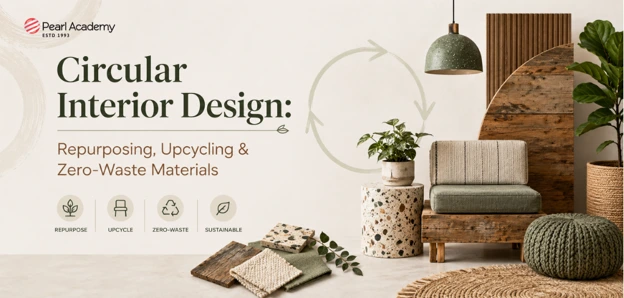
The interior design industry is undergoing a major transformation as architects, designers, and manufacturers move away from the traditional "take-make-dispose" model toward circular design principles. Rising construction waste, stricter sustainability goals, and growing consumer demand for eco-friendly spaces are driving the adoption of repurposed furniture, recyclable materials, modular interiors, and zero-waste design strategies. Circular interior design helps reduce environmental impact while creating flexible, durable, and resource-efficient spaces.
Additionally, circular design encourages designers to prioritise adaptive reuse, design for disassembly, and material longevity over frequent replacement. By considering the entire lifecycle of materials and interior components, designers can create spaces that are not only sustainable but also adaptable and economically resilient.
Become future-ready with our Interiors Programs
Know More
Circular interior design is a sustainable design approach based on the principles of the circular economy, aiming to minimize waste by using renewable, recyclable, and responsibly sourced materials. Rather than following a linear 'take-make-dispose' model, it focuses on extending the lifecycle of materials and products through reuse, repair, refurbishment, and responsible recovery. The circular interior design process ensures that each stage strictly follows sustainable practices to minimize waste and treat spaces as closed-loop ecosystems. The circular design process can be understood with the following essential questions that designers must examine before each product:
- Raw materials: What is the source of the raw materials? How are the raw materials for the project being extracted? Can they be extracted sustainably?
- Product design and features: Can the product be repaired, reused, and recycled?
- Manufacturing: Is the manufacturing process energy efficient? How much waste does the entire process produce? Could zero-waste practices be implemented?
- Distribution: How much energy does it take to deliver the product to customers? Can locally sourced materials be prioritised to reduce transportation-related carbon emissions?
- Dismantling: Can the product be dismantled, reused, or repurposed after use? Can the raw materials be reclaimed from the product?
Core Principles of Circular Interior Design
The principles of circular interior design revolve around designing spaces that minimise waste, extend the lifecycle of materials and products, and optimise resource efficiency throughout the design process. The following are some of the core principles of circular interior design:
1. Design for disassembly: Adhesives are generally avoided while designing furniture, interiors, and cabinets. Instead, often designers use screws or bolts, so the elements are detachable for disassembly. This enables easier repair, maintenance, replacement, and material recovery at the end of a product's lifecycle.
2. Prioritizing reused or recycled raw materials: To reduce embodied carbon and conserve natural resources, designers often favor upcycled textiles, salvaged timber, and recycled metals for design purposes.
3. Ensuring longevity: Using high-quality, durable materials and modular layouts, designers ensure an extended usable lifespan of structural elements as well as standalone furniture. Timeless design aesthetics and adaptable layouts further reduce the need for frequent renovations and material replacement.
4. Using regenerative and bio-degradable elements: Designers often use bio-degradable materials such as natural cork, low-carbon plasters, or hemp to produce interior products to reduce environmental impact while supporting responsible end-of-life disposal or composting, where applicable.
The repurposing and upcycling process utilizes old, discarded, or worn-out products and transforms them into functional and aesthetically valuable product. This sustainable approachreduces landfill waste, conserves resources, lowers material consumption, and extends the lifespan of existing furniture and interior elements. In interior design, it also helps preserve the character of materials while reducing the environmental impact associated with manufacturing new products.
- Repurposing: The process of repurposing usually takes a discarded product and finds a new use for it. The goal of repurposing is to extend the lifecycle of the product by minimizing wastage. After repurposing, the original shape of the item largely remains the same, and there is little to no change in its value. For example, an old wooden ladder can be repurposed as a bookshelf or towel rack without significant alterations.
- Upcycling: The process of upcycling takes a discarded item and transforms it into a new product with higher value. The aim of upcycling a product is to create something creative and innovative with existing materials. For instance, reclaimed wood can be crafted into bespoke furniture, while waste glass or stone offcuts can be transformed into decorative surfaces and accessories, adding both functional and aesthetic value.
Growing emphasis on sustainable practices across the housing and interior design industry has encouraged interior designers to adopt methods that minimize waste. As per recent trends, zero-waste materials in interior design are no longer treated as a niche choice; instead, they are increasingly becoming a mainstream specification for residential, commercial, and hospitality projects. As per a report by Grand View Research, the global zero-waste construction materials market is expected to grow to USD 208 billion by 2033, at a CAGR of 6.1%. Broadly, the following reasons can be attributed to the rise in zero-waste material adoption in interior design:
1. Shift from sustainable to circular: A recent study by Poznan University of Technology, Poland, highlights that the designs for disassembly, modular construction, and material reuse are becoming central strategies. This shift in design philosophy highlights the adoption of a circular economy instead of a linear "take-make-dispose" model that is focused on reducing waste.
2. Long-term cost efficiency: Repurposing or upcycling existing products reduces replacement and maintenance costs over time. Although some circular materials involve higher upfront costs, they often reduce lifecycle costs through durability, repairability, and lower replacement needs.
3. Interior fit-out waste driving demands: Debris, discarded materials, and offcuts generated when renovating spaces are called interior fit-out waste. These waste particles contribute to large-scale construction pollution, which is one of the largest sources of solid waste globally. Growing concerns with rising waste encourages modern interior designers to prioritize materials such as reclaimed wood, recycled metals, recycled glass, recycled plastics, and other secondary materials instead of virgin resources.
4. Focus on material recovery and not on disposal: Modern interior designs are focused on reclaiming materials from demolished construction sites such as salvaged wood, vintage ironwork, and repurposed brick to to create interiors with both aesthetic and historical value. This approach not only diverts waste from landfills but also preserves the embodied energy of existing materials while reducing the demand for new resources.
1. Google Bay View Campus: Google’s Bay View campus features several circular interior design elements. Some of the key features of the project includes:
- Interior elements such as carpets, paints, and furniture are non-toxic, regenerative, and designed for reuse, eliminating on campus wastage.
- The campus uses an onsite wastewater system that treats and reuses water to meet 100% of non-potable demands.
- The roof incorporates 50,000 custom solar panels that generate nearly 7 megawatts of electricity, supporting operations with carbon-free energy.
Image credit: blog. google
2. Philips Circular Lighting: Philips pioneered the concept of Light as a Service (LAAS) to offer lighting services on lease or rental basis. Furthermore, by adopting new technologies, the company reduces material waste during material replacements. The following are some of the key features:
- Philips pushed the concept of Light as Service, through which the company offers lighting services on a lease basis. This eliminates corporate's need for purchasing new lighting and saving costs.
- The company uses upgraded technology to offer replacements without needing to change complete hardware.
Image credit: lighting.philips.co.in
3. Triodos Bank Headquarters: The Netherland based banking services company, Triodos’s headquarter building is one of the most popular examples of circular interior design practices. The interiors of the building are constructed with remountable materials held together with nuts and bolts instead of adhesive glues. The following are some of the key features:
- The interior of the building is held together with over 165,000 screws instead of adhesives. Therefore, if the building is ever dismanttled, the parts can be repurposed and used.
- Every furniture, materials, and interior item is recorded digitally, making a “material passport” which records everything about the product including its origin and sustainability status.
Image credit: www.dezeen.com
4. The Bombay Hemp Company (BOHECO): The interiors of India-based Bombay Hemp Company are designed to follow circular interior design principles such as rapidly renewable, biodegradable hemp materials to replace carbon-heavy synthetics.
- The interiors incorporate renewable hemp fabrics and materials into design elements.
- The company sources its industrial hemp materials from local suppliers and Himalayan regions to reduce carbon footprints.
- The BOHECO office interiors use hemp wall panels, acoustic insulation, sustainable composite boards, and interior partitions.
5. ITC Hotels (ITC Grand Chola, ITC Gardenia and other properties)
ITC Hotels have incorporated circular design strategies across several hospitality projects by prioritizing resource efficiency and responsible material selection.
Some of the key features include:
- Reclaimed wood, locally sourced stone, and regionally manufactured materials reduce transportation impacts.
- Water-efficient fixtures, wastewater recycling systems, and energy-efficient lighting contribute to lower operational resource consumption.
- Durable interior finishes and furniture are selected to maximise lifecycle performance and reduce replacement frequency.
Image Credit: ITC Grand Chola
6. Krushi Bhawan, Bhubaneswar
Krushi Bhawan is widely recognised for integrating local craftsmanship, reclaimed materials, and passive design strategies into contemporary architecture and interiors.
Some of the key features of the project include:
- Locally sourced laterite stone, reclaimed timber, and handcrafted terracotta elements reduce embodied carbon.
- Interior finishes celebrate regional craftsmanship while minimizing the use of resource-intensive manufactured materials.
- Durable materials and climate-responsive design reduce maintenance requirements and extend the building's lifecycle.
7. Firozabad Glass Cluster, Uttar Pradesh
The Firozabad glass industry is increasingly adopting recycled glass (cullet) to manufacture decorative and functional interior products, supporting circular material use.
Some of the key features include:
- Recycled glass is used to manufacture lighting fixtures, decorative accessories, tableware, and interior décor products.
- Using cullet significantly reduces the energy required for glass production while diverting waste from landfills.
- The cluster promotes material recovery and supports India's traditional glassmaking craftsmanship through sustainable production practices.
The future of interior design is shifting from take-make-dispose to a closed‑loop model that is focused on using materials for reused, repaired, and regenerated, reducing waste and environmental impact. Using sustainable practices, designers are moving away from building interiors to periodically demolished and rebuilt; designers are creating interiors that can adapt, evolve, and minimize waste over their entire lifecycle. Emerging practices such as modular design, material passports, and design for disassembly are further enabling interiors to remain flexible, resource-efficient, and responsive to changing user needs.

Student Guidance Center: Our Counselors are Just a Click Away.
As sustainability regulations tighten and consumers increasingly demand environmentally responsible spaces, circular interior design is expected to become a mainstream design philosophy rather than a niche practice. By prioritizing adaptable layouts, reusable materials, modular furniture, and zero-waste construction methods, designers can create interiors that remain functional, aesthetically appealing, and resource-efficient throughout their lifecycle. The future of interior design lies not only in creating beautiful spaces but also in designing systems where materials retain value for as long as possible.
References: