Become future-ready with our Degree Programmes
Know More
3 things you learnt during the process of designing Redress Design Award collection.
I’m very new to the ‘sustainable’ fashion field and there is a lot that I yet have to learn. Few things I did pick up have been very eye opening. A lot of waste can be eliminated at the design stage. Intelligent pattern cutting, and conscious resourcing do make a huge difference.
Another important note is that almost anything can be repurposed into a beautiful piece of clothing, you just need your creative intuition and grit to make things happen. Lastly, I’ve found it better to work backwards. Before you open your sketchbook, study what resources surround you and draw inspiration from that to put in your design process. Being mindful of your resources can help you avoid make wasteful purchases and more importantly is a better way to design, as you’re pushed to reuse and up-cycle.
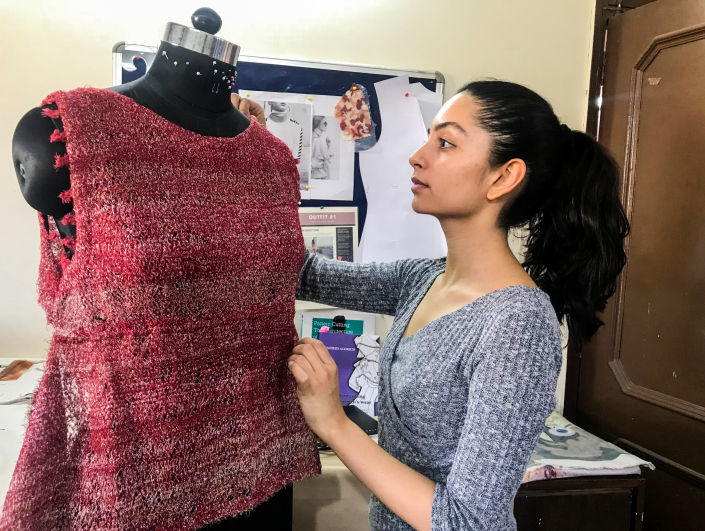
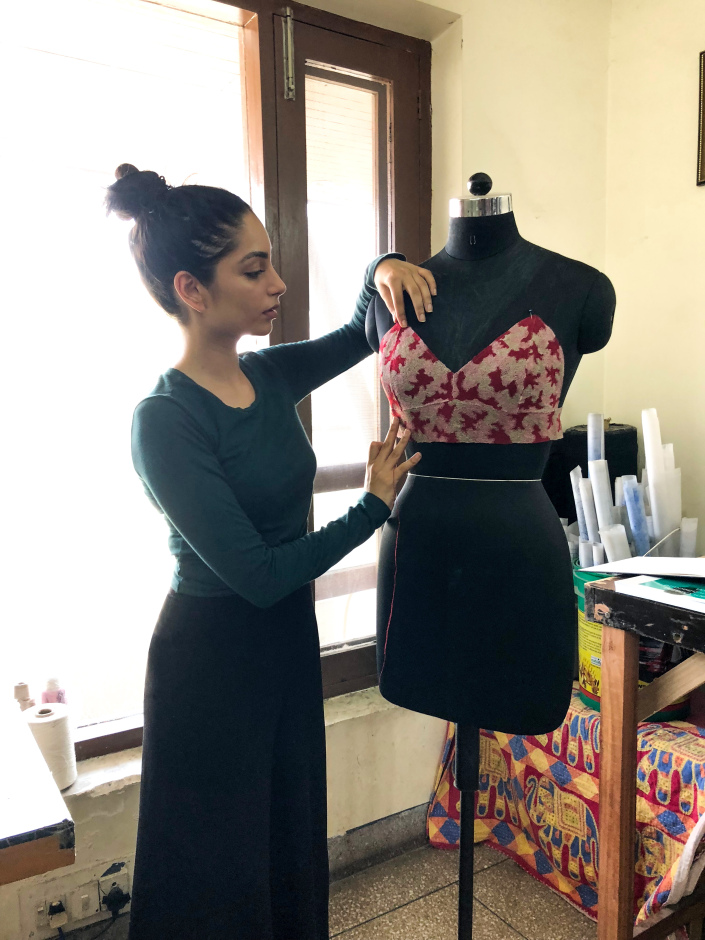
For my collection, I used resources that were readily available to me. I familiarised myself to this raw material by doing a variation of fabric manipulation and material exploration to figure out how best I can use them in my designs.
How do you think sustainable fashion can move from a niche to the mainstream, especially in India?
Currently the mainstream fashion brands are solely focused on what’s trending and how to quickly increase sale volumes. Their failure to look beyond that is gravely concerning. Especially in India, a major reason for brands not shifting their practices is because the consumers aren’t fully aware about this crisis to demand for an eco-active change. Once the demand for more eco-friendly products rise, these major brands will start to comply. On the positive side, the change from mainstream to niche is doable because we see it happening. We have mainstreams brands like Grassroot by Anita Dongre, Doodlage and Péro who support local artisans and take their sustainable design practices seriously.
We are moving in the right direction but in order for the transition to happen, major changes in the supply chain need to take place and the consumers need to be made aware about this issue. We’re getting there but it’s going to be a slow process.
What is the biggest misconception about sustainable fashion?
That because sustainable fashion is recycled, it’s ‘dirty’. When in reality it’s far from it and in my opinion can be considered an art form. Making something out of ‘nothing’ sounds pretty amazing to me. Today sustainable fashion has advanced and does not compromise on design or aesthetics. Designers have created products that people are happily willing to purchase only to later find out its eco-friendly, that’s how you know you’ve done something right. Now I can see the expectations of consumers shifting, as they want to be a part of a greater change and are looking for brands that have set an example towards the sustainable fashion movement.
What are things you wish Indian fashion students/budding Indian Fashion designers should know about sustainable fashion design?
It is extremely crucial to be ethical when it comes to your design practices. From sourcing, production to execution everything needs to align in a way where there is none to minimal wastage. Since fashion is currently the second largest cause of environmental pollution, being sustainable isn’t an option anymore; it’s a prerequisite. A problem this big can only be solved if we work in collaboration, share innovative ideas and spread awareness about the importance of a sustainable lifestyle.
What is your advice for the next breed of fashion designers?
I would advise them to be mindful about their design practices. A small pro-eco change can lead to a huge positive impact. As designers we have a huge role to play in all this. We can influence our consumers and create a positive change in this industry. So, I encourage you to be creative with your ways, voice your opinion and share your ideas.

Student Guidance Center: Our Counselors are Just a Click Away.
What is your next goal after joining Redress Design Award?
I have a few projects that are in the process of building up. Currently, I’m focused on developing my collection for the Redress Design Award. I am currently also a part of the Lakmé Fashion Week x Reliance incubator program and that has given me an amazing opportunity to network with a few important people in the industry. I’m also working on developing my brand’s website, so I can increase my reach and share my newly formed sustainable ethos. After Redress, I plan on creating my new sustainable line for next summer but I’m keeping my options open for new and exciting opportunities.