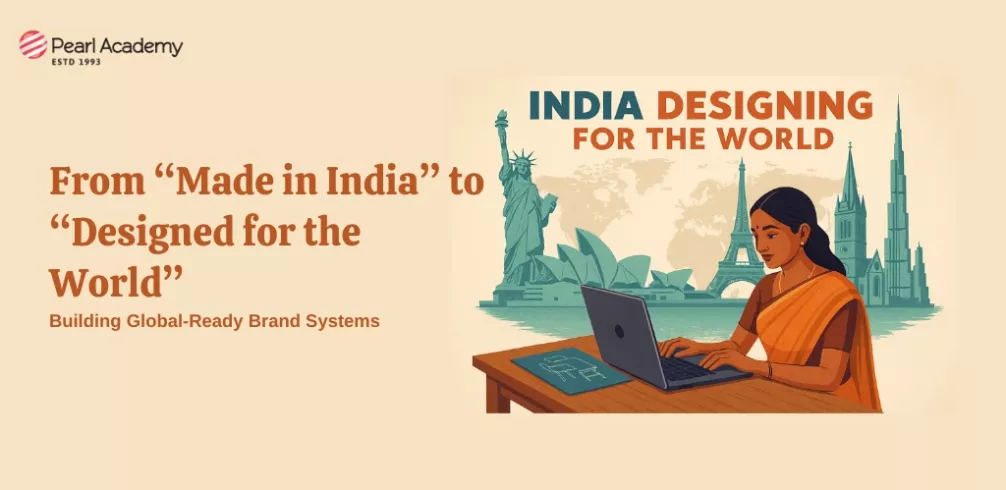
India is no longer the back end or the manufacturing engine of the world. This shift has been a well thought to not move merely from product to premiumisation, but from Made in India to Designed for the world. As we witness a profound structural shift in the marketplace, new age entrepreneurs are building global ready brand systems.
That difference has changed everything. Globally, brands are navigating the VUCA world shaped by volatile currencies, geopolitical disruptions, supply chain fragmentation, hyper aware consumers and more.
India stands at a fascinating intersection of 3 main factors propelling global markets- culturally intelligent, operationally resilient and emotionally trusted. It’s the move from Utility to Identity.
Today’s market is shaped by:
- Wars and geopolitical tensions
- Red Sea shipping disruptions
- China+1 sourcing strategies
- Currency fluctuations
- Consumer distrust toward greenwashing
- Trade nationalism
- AI-led transparency expectations
McKinsey notes that geopolitical uncertainty and changing trade flows are actively reshaping consumer and business behaviour worldwide. This would only mean that Resilience is the bestseller.
Become future-ready with our Business Programs
Know More
To be "Designed for the World" requires a brand to speak a universal language while maintaining its unique local soul. It is no longer enough to offer a product that is "good for the price." In the current global climate, Indian brands are competing based on Cognitive Legitimacy. This means the product must feel intuitive to a consumer in London, Tokyo, or New York without losing the "India Modern" aesthetic that gives it a competitive edge.
The successful brand systems of 2026 are built on Universal Design Principles. They solve global problems through an Indian lens. Whether it is sustainable beauty brands utilizing Ayurvedic science or D2C electronics that rival Silicon Valley aesthetics, the focus has shifted to the user experience. The design is the bridge that carries the brand across borders.
Building a global brand is an expensive endeavour, but sustaining one is a matter of psychological engineering. This is where many emerging brands falter. They focus so heavily on the "Launch" that they neglect the Retention Loop.
In 2026, global retention is driven by three key pillars:
- Reliability of Infrastructure: A brand is only as good as its last mile delivery. Global ready systems integrate seamless logistics and localized customer support to ensure the post purchase experience matches the marketing promise.
- The Shared Value Narrative: International consumers, particularly Gen Z and Alpha, align with brands that demonstrate a commitment to global issues like sustainability and ethical labor. Retention is built when the customer feels their purchase is an act of advocacy.
- Hyper-Personalization: Using data to understand that a customer in Mumbai has different needs than one in Munich yet providing both with a consistent brand feeling.
The Story of "India Modern"
Consider the rise of Indian luxury spirits or high-end textile houses. They do not lead with "cheap labor." Instead, they lead with the story of craftsmanship and heritage, backed by modern precision. This creates an Emotional Lock-in. When a customer buys into a story, they are far less likely to churn than when they buy into a price point.
Retention in the global market is the result of trust. And trust is built when a brand from India proves it can deliver world class quality consistently, transaction after transaction.

Student Guidance Center: Our Counselors are Just a Click Away.
The journey from "Made in India" to "Designed for the World" is not just a change in geography; it is a change in mindset. It requires moving from a mindset of "selling" to a mindset of "building." As we look toward the remainder of 2026, the brands that will define this decade are those that see the world as a single community and their Indian heritage as a unique, premium advantage. The next leap is:
Designed in India. Interpreted globally. Trusted universally. In a fragmented world shaped by geopolitical unrest, volatile currencies, de-dollarised aspiration, and conscious consumption, brands that survive will not simply be fashionable.
They will be culturally rooted, economically agile, ethically transparent, and globally adaptable. India’s moment is not merely industrial. It is civilisational. And perhaps for the first time in modern branding history, the world is ready not only to buy from India but to imagine through India.
References
- Chaudhuri, S., & Ray, S. (2024). The new Indian MNCs: Evolution of global competitiveness and brand equity. Oxford University Press.
- Kapferer, J. N. (2025). The future of brand identity: Navigating the global-local paradox. Journal of Brand Management, 32(1), 45–58.
- NielsenIQ. (2026).The global consumer report: Decoding the rise of emerging market brands. https://nielseniq.com/global-consumer-trends-2026